











Dishwasher Buying Guide for Indian Kitchens

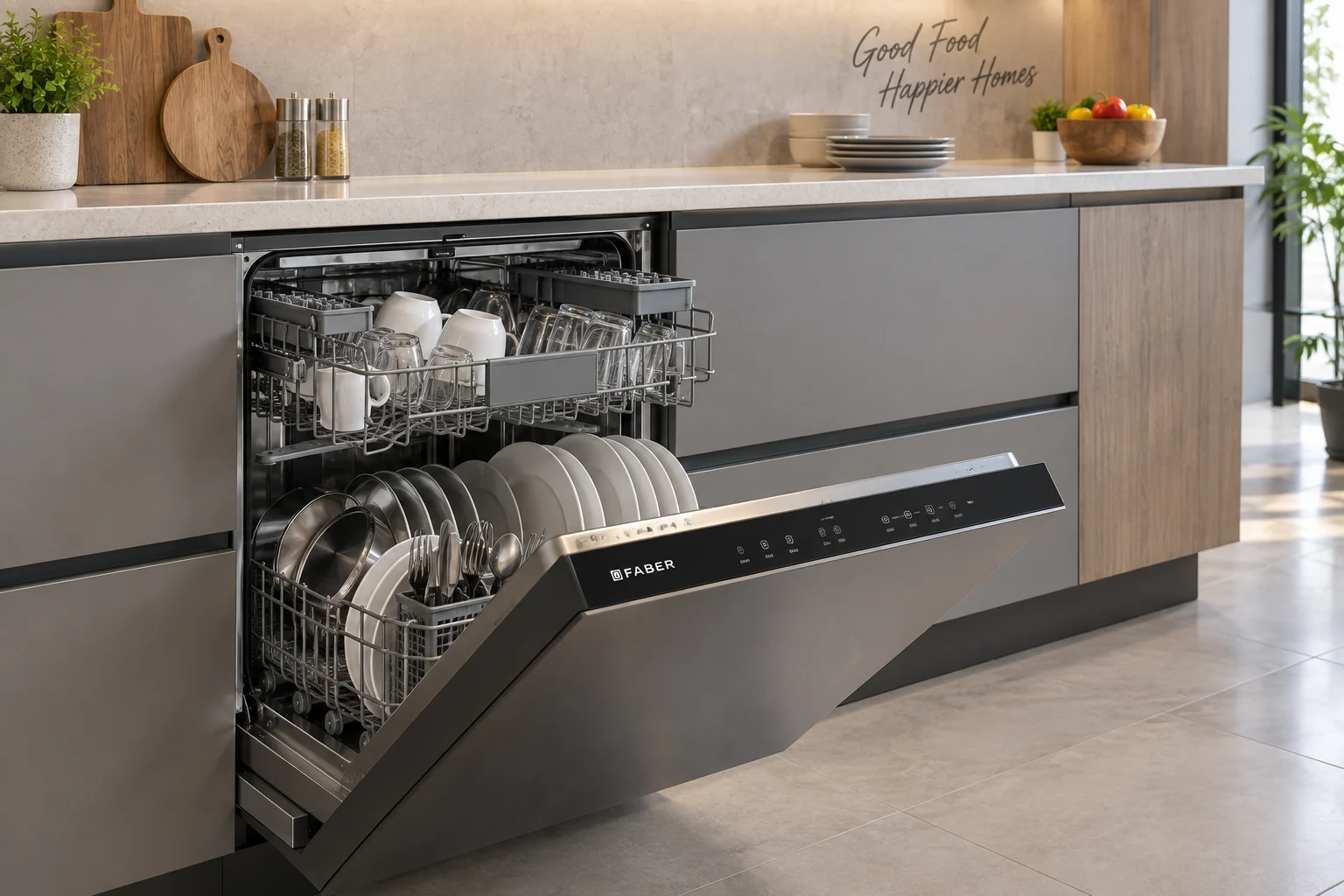
Dishwasher Buying Guide for Indian Kitchens
A dishwasher can save considerable time in a busy kitchen, but choosing the right model involves more than simply comparing price and appearance.
Indian households often use a combination of plates, bowls, pressure cookers, kadais, serving utensils and heavily soiled cookware. That makes capacity, rack flexibility and wash programs particularly important.
This dishwasher buying guide India will help you understand the main features to compare before purchasing.
1. Choose the Right Dishwasher Type
Dishwashers are generally available in a few common formats.
Freestanding Dishwasher
A freestanding dishwasher is designed to stand independently, usually under or beside the kitchen counter.
It can be a practical option when you want relatively simple installation without integrating the appliance completely into cabinetry.
Built-In Dishwasher
A built-in dishwasher is installed within the kitchen cabinetry for a more integrated appearance.
It works particularly well in modular kitchens where the appliance space, water connection and electrical point can be planned in advance.
You can browse available Dishwashers at OneKitchen.
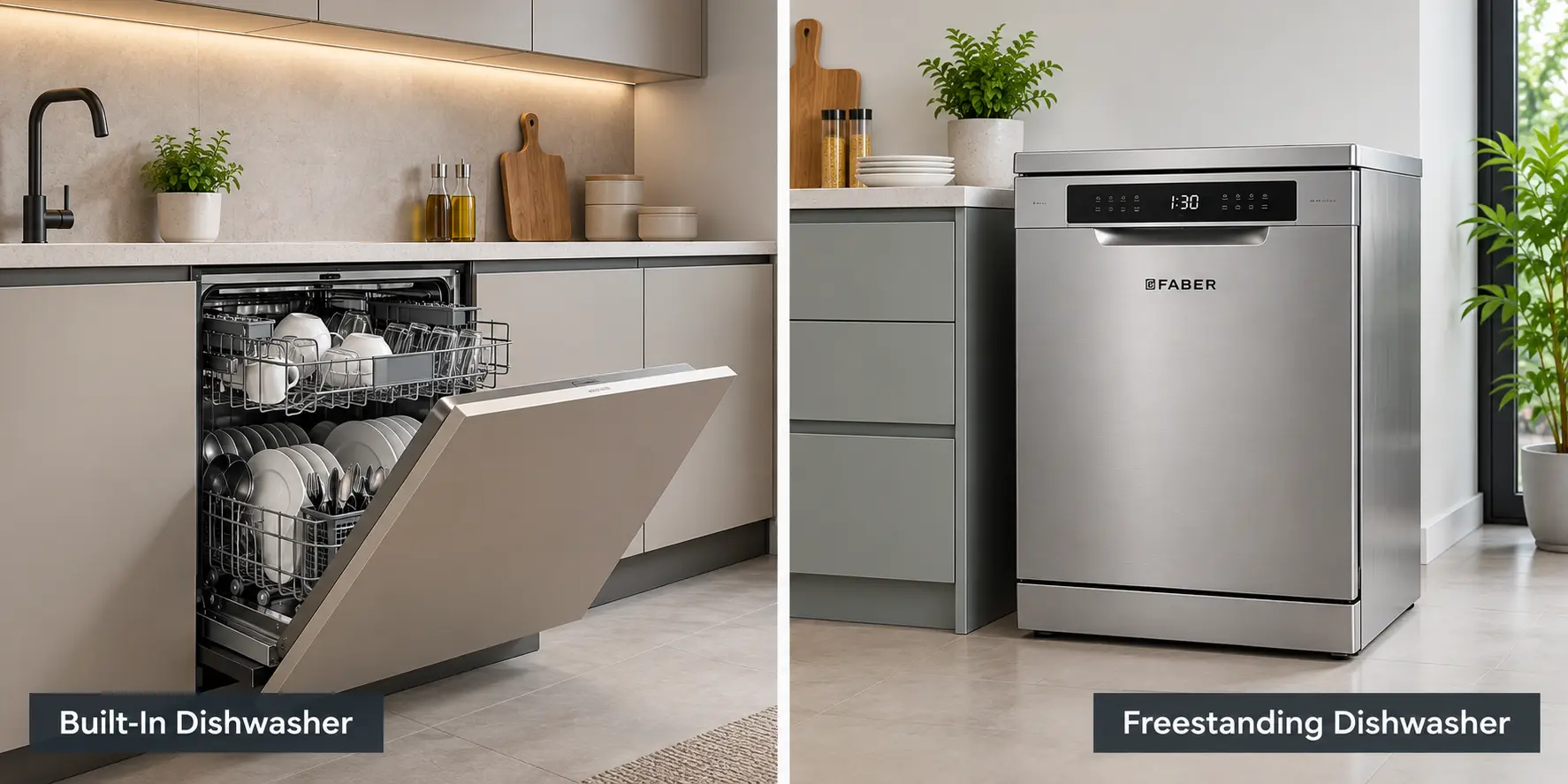
Built-In vs Freestanding Dishwasher
| Feature | Built-In Dishwasher | Freestanding Dishwasher |
|---|---|---|
| Installation | Installed within kitchen cabinetry | Standalone unit with simpler installation |
| Design | Integrated, seamless kitchen appearance | Visible appliance with its own exterior finish |
| Flexibility | Requires planned cabinet space | Easier to reposition or replace |
| Kitchen Fit | Well suited to modular kitchens | Suitable for existing or rented kitchens |
| Installation Planning | Cabinet dimensions should be planned in advance | Needs suitable water, drain and power connections |
| Best For | Clean, integrated long-term kitchen setups | Buyers wanting flexibility and easier installation |
2. Understand Place Settings
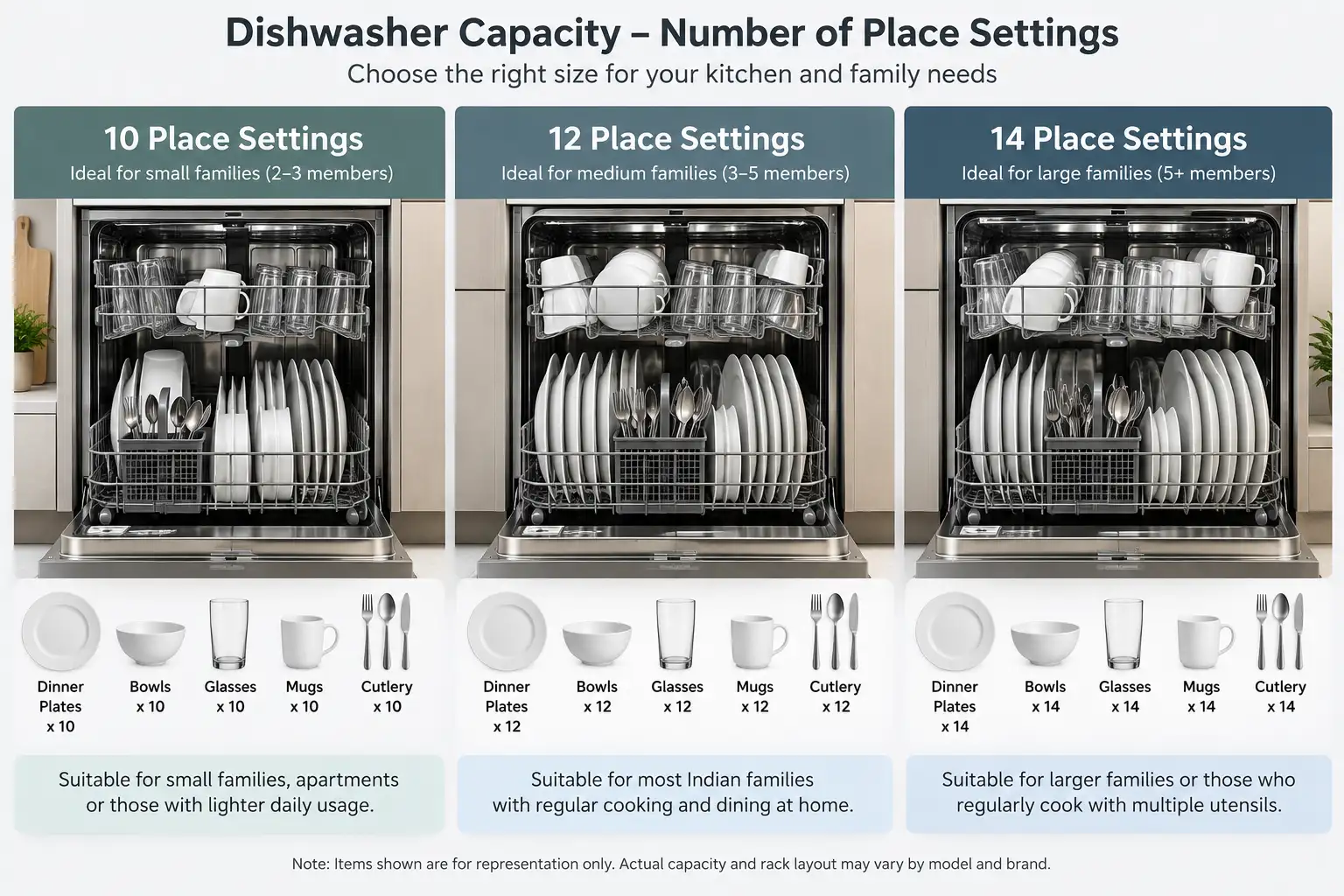
Dishwasher capacity is commonly described using place settings.
A place setting represents a standardized group of dining items such as plates, bowls, glasses and cutlery.
Larger-capacity dishwashers can accommodate more items in a single cycle, but the practical capacity also depends on:
- Size of your utensils
- Number of large pots and pans
- Rack design
- Adjustable shelves
- Cutlery arrangement
For Indian households, don’t choose capacity based only on the number of family members. Consider how much cookware you normally use during a full meal.
3. Look at the Rack Layout
The internal rack design can make a major difference to everyday usability.
Useful features may include:
- Adjustable upper rack
- Foldable tines
- Dedicated cutlery tray
- Removable cutlery basket
- Height adjustment
- Space for large plates
- Flexible areas for pots and pans
If you regularly use large kadais or pressure cookers, check whether the lower rack can accommodate them comfortably.
4. Check the Wash Programs
Dishwashers commonly offer several wash cycles designed for different levels of soiling.
Depending on the model, programs may include:
Intensive Wash
Designed for heavily soiled cookware and utensils.
Normal or Daily Wash
Suitable for everyday plates, bowls and regular kitchenware.
Eco Mode
Designed to reduce water and energy consumption, although the cycle may take longer.
Quick Wash
Useful for lightly soiled dishes that do not require an intensive cycle.
Glass or Delicate Program
Designed for more delicate items such as glassware.
The exact programs vary between models, so compare the ones you are realistically likely to use.
5. Consider Indian Cooking Habits
Indian cooking can leave utensils with oil, masala, starch and dried food residue.
For households that regularly cook curries, dal, rice, fried foods or pressure-cooked meals, look for a dishwasher with an effective intensive or heavy wash program.
Loading technique also matters.
Avoid overcrowding the dishwasher because water needs to reach the surfaces of the utensils properly.
Very heavily burnt cookware may still require soaking or some manual pre-treatment depending on the residue and dishwasher model.
6. Check Drying Performance
A good dishwasher should not only wash the dishes but also help dry them effectively.
Different models may use:
- Residual heat drying
- Heated drying
- Automatic door opening
- Condensation drying
- Fan-assisted drying
Some plastic utensils may retain more moisture than metal or ceramic items because plastics do not hold heat as effectively.
Check the drying technology when comparing models if dry dishes straight after the cycle are important to you.
7. Water Supply and Drainage Requirements
Before buying a dishwasher, confirm that your kitchen has a practical installation location.
A dishwasher generally needs:
- Water inlet connection
- Drain connection
- Electrical outlet
- Sufficient ventilation and clearance
- Suitable floor/cabinet space
For a built-in model, measurements should be taken carefully before ordering.
The installation requirements provided by the manufacturer should always take priority.
8. Measure the Available Space
Never purchase a dishwasher based only on the approximate width of an empty cabinet.
Measure:
- Available width
- Height
- Depth
- Door-opening clearance
- Distance from water connection
- Distance from drain
- Electrical point location
Also account for hoses and connections behind the appliance.
For modular kitchens, planning these connections during the kitchen design stage makes installation much easier.
9. Check Noise Levels
Dishwasher noise becomes more important in open kitchens or homes where the kitchen is close to the living area.
Noise is generally specified in decibels (dB).
A lower dB rating usually means quieter operation, although the perceived sound will also depend on installation, room acoustics and the cycle being used.
If you frequently run the dishwasher at night, noise level is worth comparing.
10. Look for Useful Features
Modern dishwashers may offer a range of convenience features.
Depending on the model, these can include:
- Delay start
- Half-load wash
- Adjustable racks
- Child lock
- Extra drying
- Remaining-time display
- Automatic wash programs
- Salt and rinse-aid indicators
- Wi-Fi or app connectivity
Don’t pay extra for features you are unlikely to use.
Capacity, cleaning performance and rack flexibility should generally come before smart features.
11. Understand Dishwasher Salt and Rinse Aid
Many dishwashers use dishwasher salt to help the appliance’s water-softening system.
This is different from ordinary table salt.
A rinse aid can help improve drying and reduce water spots on dishes and glassware.
Requirements depend on the dishwasher and the hardness of your local water, so follow the manufacturer’s instructions.
12. Check Energy and Water Consumption
Dishwasher efficiency varies between models and programs.
When comparing appliances, look at the manufacturer’s stated:
- Energy consumption
- Water consumption
- Eco program
- Cycle duration
An Eco program is designed to use resources more efficiently, although it may take considerably longer than a normal wash cycle.
13. Can Indian Utensils Go in a Dishwasher?
Many commonly used kitchen items can be washed in a dishwasher, but not everything belongs inside one.
Always check manufacturer instructions for both the dishwasher and cookware.
Items that may require extra caution can include:
- Wooden utensils
- Some aluminium cookware
- Hand-painted crockery
- Delicate glassware
- Certain non-stick cookware
- Copper or brass utensils
- Items with glued components
If you’re unsure, check whether the cookware is marked dishwasher-safe.
14. Dishwasher vs Hand Washing
A dishwasher offers convenience by automating much of the washing process and allowing multiple dishes to be cleaned together.
Hand washing, however, may still be useful for:
- A small number of utensils
- Delicate items
- Certain cookware materials
- Quickly needed items
Many households use a combination of both rather than relying exclusively on one method.
15. Maintenance Matters Too
Regular maintenance helps keep a dishwasher working effectively.
Typical maintenance includes:
- Cleaning the filter
- Checking spray arms
- Removing trapped food particles
- Wiping door seals
- Refilling salt when required
- Refilling rinse aid when required
- Running cleaning cycles as recommended
Check the appliance manual because maintenance instructions vary between brands and models.
Which Dishwasher Should You Choose?
When following a dishwasher buying guide India, focus first on your household’s real usage rather than simply buying the largest or most feature-rich appliance.
Prioritize:
- Enough capacity for your usual utensils
- Flexible rack arrangement
- Effective intensive wash cycle
- Suitable installation dimensions
- Good drying performance
- Acceptable noise level
- Reliable service support
A household using several large utensils every day may value rack flexibility more than someone mainly washing plates and glassware.
Frequently Asked Questions
Is a dishwasher useful for Indian cooking?
Yes. Dishwashers can handle many everyday Indian dishes and utensils, particularly when the correct wash program and loading arrangement are used.
Do I need to rinse dishes before putting them in the dishwasher?
Usually, large food scraps should be removed. Whether additional rinsing is necessary depends on the dishwasher, cycle and amount of dried-on food.
Can kadai and pressure cooker utensils go in a dishwasher?
Many can, depending on their material and manufacturer instructions. Always confirm that the specific cookware is dishwasher-safe.
Does a dishwasher need hot water?
This depends on the model. Many dishwashers heat water internally, but installation requirements should be checked in the manufacturer’s specifications.
Do dishwashers need special detergent?
Yes. Use detergent specifically designed for automatic dishwashers rather than normal hand-washing dish liquid.
Where should a dishwasher be installed?
Ideally near suitable water, drainage and electrical connections, while maintaining the clearances required by the manufacturer.
This dishwasher buying guide for Indian kitchens should help you compare the features that matter most before buying.
Still Need Help Choosing a Dishwasher?
Not sure which capacity, rack layout or dishwasher type will suit your kitchen?
Browse our Dishwashers to compare available models.
You can also Contact OneKitchen if you have questions before purchasing.
Email: cs@onekitchen.in